
Choosing Coverage Limits and Deductibles for California Homeowners
Did you know that an estimated 64 percent of homes across the country are underinsured? According to industry data, this massive coverage gap leaves a majority of families vulnerable to severe out-of-pocket expenses after a disaster. Here in California, that statistic hits especially close to home.
Navigating the Complexities of Property Protection
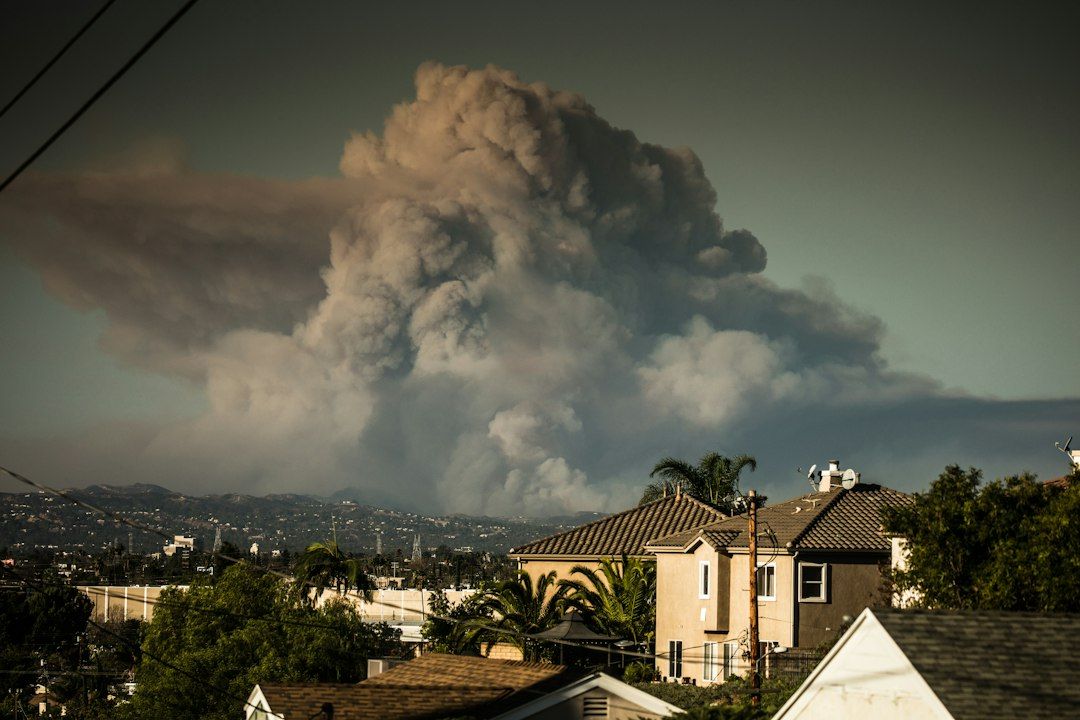
Did you know that an estimated 64 percent of homes across the country are underinsured? According to industry data from Copeland Insurance Agency, this massive coverage gap leaves a majority of families vulnerable to severe out of pocket expenses after a disaster. Here in California, that statistic hits especially close to home. Between rigorous local building codes, volatile labor markets, and the persistent threat of wildfires, getting your coverage right is not just a regulatory checkbox. It is a fundamental step toward securing your family's financial future.
At Sara Mirzaei Insurance Agency, we have spent over 15 years crafting tailored insurance plans for individuals and businesses across the state. We regularly meet with homeowners who are unsure if their current policies will truly protect them when the worst happens. Many people think finding the best homeowner insurance in california simply means looking for the lowest monthly premium. However, true protection requires a careful balancing act between coverage limits and deductibles.
Our mission is to help protect families and their possessions by providing professional, customized insurance services. In this comprehensive guide, we will walk you through exactly how to choose the right coverage limits and deductibles based on the unique risks we face in California.
The Foundation of Protection: Rebuild Cost Versus Market Value
When we sit down with new clients to review their ca home owners insurance, the most common area of confusion is the dwelling limit. The dwelling limit is the maximum amount your insurance company will pay to rebuild the physical structure of your home. A surprisingly high number of homeowners believe this limit should match the current real estate market value of their property, but that is a dangerous misconception.
Real estate market value includes the price of the land your home sits on, the desirability of your neighborhood, and the quality of local schools. If your home burns down, the land is still yours. The dwelling limit on your policy only needs to cover the cost of the labor and materials required to clear the debris and construct a brand new house from the ground up.
In California, the disconnect between market value and rebuild cost can go in two very different directions. Consider a modest historic home in San Francisco. It might sell for 2 million dollars on the open market, but 1.2 million dollars of that price might be purely the value of the land. The actual cost to rebuild the structure might only be 800,000 dollars. If you insure that home for 2 million dollars, you are paying for coverage you will never be able to use.
Conversely, imagine a sprawling custom home in a more rural area of the state. It might have a market value of 600,000 dollars. However, because it is large and far from major supply hubs, the materials and labor required to rebuild it might cost 900,000 dollars. If you insure the home for its 600,000 dollar market value, you would be underinsured by 300,000 dollars in the event of a total loss.
Understanding this distinction is vital to answering the question of How Much Does Homeowners Insurance Cost in California?. Recent estimates emphasize how expensive rebuilding has become. Based on recent 2025 construction figures from Golden State Design & Engineering, the average cost to build a custom home in California ranges from 400 to 700 dollars per square foot. For high end or luxury projects, especially in the Bay Area, costs can easily exceed 800 dollars per square foot. These soaring numbers highlight exactly why your dwelling coverage limits must be calculated with acute precision.
Deciphering Key Coverage Limits
Selecting the right limits goes far beyond just the main structure of your house. A robust policy contains several distinct "buckets" of coverage. To help you secure the best house insurance in california, we always review these components in detail.
Dwelling Coverage and Extended Replacement Cost
As we established, your base dwelling limit must reflect current local construction costs. But what happens if a massive regional wildfire destroys hundreds of homes at once? In these scenarios, the sudden surge in demand for contractors and lumber causes local construction prices to skyrocket overnight.
This is where Extended Replacement Cost coverage comes into play. This crucial endorsement provides a buffer above your base dwelling limit, typically offering an extra 25 percent, 50 percent, or even 100 percent of coverage if construction costs surge. For anyone holding home owners insurance in california, an extended replacement cost endorsement is virtually mandatory for peace of mind.
Ordinance or Law Coverage
California has some of the most rigorous environmental and safety building codes in the nation, known as Title 24. If your 1970s home is severely damaged, you cannot legally rebuild it exactly as it was. The state requires the new structure to feature modern electrical systems, fire resistant roofing materials, energy efficient windows, and often solar panels.
Standard policies might only allocate 10 percent of your dwelling limit to cover these mandatory upgrades. If your dwelling limit is 500,000 dollars, you would only have 50,000 dollars to cover massive code upgrades, which is rarely enough. We strongly advise our clients to look at higher percentages for ordinance and law coverage. You can read more about standard inclusions in our guide on Homeowners Insurance in California: What a Standard Policy Really Covers.
Personal Property Limits
Your personal property coverage protects everything inside your house. If you could turn your house upside down and shake it, everything that falls out is personal property. Many insurance companies default this limit to 50 percent of your dwelling coverage.
The critical choice here is between Actual Cash Value and Replacement Cost Value. Actual Cash Value pays you what your items are worth today, meaning it factors in depreciation. If your ten year old sofa burns up, the insurance company will pay you garage sale prices for it. Replacement Cost Value, on the other hand, pays you the exact amount it costs to buy a brand new equivalent sofa today. Always opt for Replacement Cost Value for your personal property.
Loss of Use
If your home is rendered uninhabitable by a covered peril, Loss of Use coverage pays for your temporary housing, food, and extra living expenses. Finding a short term rental in California is exceptionally expensive. Make sure your policy provides an adequate dollar limit or, ideally, an extended time limit such as 24 months of coverage, because rebuilding a home in this state almost always takes longer than a year.
A Note on the California FAIR Plan
Due to recent shifts in the insurance market, many homeowners in high risk wildfire areas have been forced onto the California FAIR Plan. This is the state mandated insurer of last resort. It is essential to understand that the FAIR Plan has strict caps. Reports from FireRoofs highlight that as of 2025, the FAIR Plan limits residential coverage to 3 million dollars. For luxury estates or large properties, this leaves a massive uninsured gap. In these situations, we work closely with homeowners to establish wraparound policies or Difference in Conditions coverage to supplement the FAIR plan limits.
The Deductible Dilemma: Balancing Risk and Reward
Once your coverage limits are properly established, the next major decision is choosing your deductible. Your deductible is the amount of money you are responsible for paying out of pocket before your insurance coverage kicks in.
There is an inverse relationship between deductibles and premiums. Choosing a higher deductible lowers your annual premium, while choosing a lower deductible increases your annual premium. Many homeowners instinctively choose the lowest deductible possible, such as 500 dollars or 1,000 dollars, thinking it offers the safest route. However, this is not always the most financially sound strategy.
The Break-Even Strategy
At our agency, we use a simple break-even calculation to help clients decide. Suppose you are looking at a home owners insurance california policy. A 1,000 dollar deductible might result in an annual premium of 1,800 dollars. Increasing that deductible to 2,500 dollars might drop your annual premium to 1,500 dollars.
By taking on an extra 1,500 dollars of risk (the difference between the two deductibles), you save 300 dollars every single year. It would take exactly five years of being claim free to break even on that choice. If you generally avoid filing small claims and have sufficient emergency savings, taking the higher deductible is often a wise financial move. We cover similar cost saving strategies in our article on Affordable Home Insurance in California Without Sacrificing Coverage.
Separate Peril Deductibles
It is also vital to recognize that your policy might have separate deductibles for different types of damage. While you might have a 1,000 dollar standard deductible for a kitchen fire, policies in certain regions may impose a separate percentage deductible for windstorms or hail.
Furthermore, if you purchase a separate earthquake insurance policy, the deductible is almost always calculated as a percentage of your dwelling limit rather than a flat dollar amount. Common earthquake deductibles range from 10 percent to 15 percent. If your home is insured for 800,000 dollars and you have a 10 percent earthquake deductible, you would be responsible for the first 80,000 dollars of damage. Understanding these distinct deductibles ensures you are never caught off guard.
Common Mistakes When Structuring a Policy
Over our years serving the California community, we have seen homeowners make the same few mistakes repeatedly when setting up their policies online without expert guidance. Avoiding these pitfalls is the key to securing the most reliable home owners insurance ca has to offer.
First, people often fail to update their coverage limits after a major remodel. If you upgrade your kitchen with custom cabinetry and commercial grade appliances, the cost to rebuild your home increases. Failing to alert your agent means those expensive upgrades are entirely unprotected.
Second, many homeowners treat their insurance policy as a maintenance plan rather than a catastrophe safety net. Filing small claims for 1,200 dollars of water damage when you have a 1,000 dollar deductible will only yield a 200 dollar payout. However, having a claim on your record can cause your premium to jump significantly at renewal time. We advise our clients to handle small maintenance issues out of pocket and save their insurance for truly catastrophic events.
Third, individuals frequently overlook the massive discounts available through bundling. If you are struggling to afford the right coverage limits, bundling your property coverage with your vehicle policies can yield significant savings, freeing up room in your budget for better limits. You can explore this further in our guide to Home and Auto Insurance Bundles in California.
Finally, complacency is a major risk factor. Setting your limits once and never looking at them again is a recipe for disaster. Inflation, rising labor costs, and changes in the local building supply chain mean that the amount of coverage you needed three years ago is likely insufficient today. We make it a priority to perform regular coverage reviews with our clients to keep their protection fully aligned with the real world.
Insights from a Local Agency Perspective
The insurance landscape is changing rapidly. We see firsthand how global economic pressures and local climate risks shape the options available to our community. Insurance carriers are utilizing increasingly sophisticated data models to assess risk down to the exact geographical coordinates of your property.
This means a generic, one size fits all approach to insurance no longer works. A customized strategy is necessary. We spend time evaluating factors like your home's proximity to brush areas, the age of your roof, and your community's fire protection class. By proactively identifying and mitigating these specific risks, we can help you structure deductibles that are comfortable for your budget while securing limits that will actually hold up against modern reconstruction costs.
When you work with an independent or local agency, you gain an advocate. Our relentless commitment to customer satisfaction means we do not just sell you a policy and disappear. We continuously monitor the California market, ensuring that as reconstruction costs climb, your policy limits climb right alongside them. If you want a deeper dive into the broader property protection landscape, we invite you to read our California Homeowners Insurance Guide.
Final Thoughts on Securing Your Home
Your home is likely your most valuable asset, holding not just your financial equity but your family's memories and sense of security. Choosing the proper coverage limits and deductibles is the only way to ensure that a sudden disaster does not become a permanent financial tragedy.
By understanding the vital difference between market value and replacement cost, investing in crucial endorsements like extended replacement cost and ordinance coverage, and strategically choosing a deductible you can comfortably afford in an emergency, you build a fortress of protection around your lifestyle. Insurance is a dynamic tool, and it requires attention and expertise to wield effectively.
Sara Mirzaei Insurance Agency
Ready to ensure you have the right protection at the best possible rate? Contact us today for a comprehensive coverage review and a personalized quote tailored to your lifestyle.
By Sara Mirzaei & Team