
Restaurant Delivery Insurance in California: Who Covers the Trip?
Own drivers, personal cars, and delivery apps create different insurance questions. Learn how to review auto, employee, liability, and property coverage for a California restaurant.
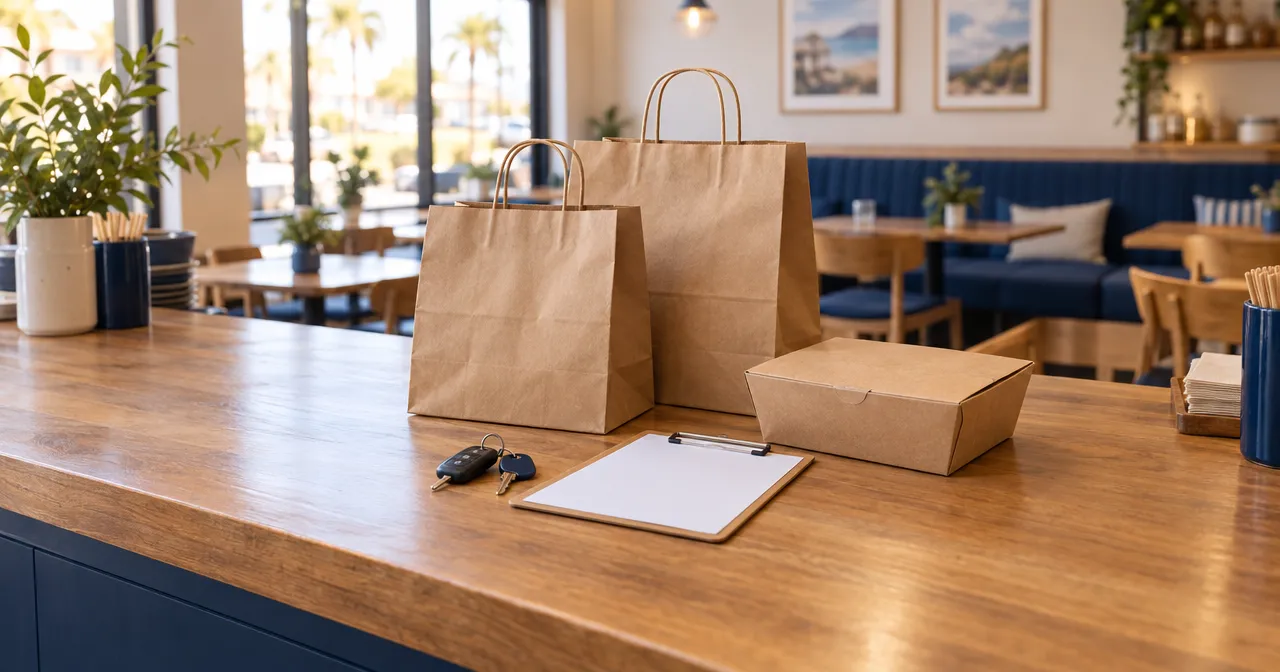
A café in Woodland Hills can take orders at the counter, through its website, and through a delivery app during the same lunch rush. One order may leave with an employee in a restaurant-owned car; another may leave with a courier supplied by a platform. Both look like “delivery” to the customer. To an insurer, they can be very different operations.
The useful question is not simply whether your restaurant has insurance. It is who drives each order, whose vehicle is used, and which policy is intended to respond if a collision, injury, or other loss occurs. That question matters for restaurants, coffee shops, bakeries, and franchise locations across California. It also helps you separate vehicle risks from food, property, and employee risks that a delivery program can create.
Start with the actual delivery route
Map every way an order reaches a customer before comparing policies:
- Your business owns or leases the vehicle. A restaurant van or car makes scheduled deliveries, perhaps between locations as well as to customers.
- A worker uses a personal vehicle. A cashier takes a catering order after a shift, or a regular driver uses their own car for evening orders.
- A third-party courier takes the order. The customer may order through a marketplace app, or your own website may request a courier through a separate delivery service.
- The arrangements overlap. Some platforms let a merchant use its own drivers for certain orders and a courier network for others. DoorDash’s Self-Delivery description, for example, says the merchant’s team can deliver platform orders while Dashers may handle others. The app where the order was placed does not, by itself, tell you who drove it.
For each route, note who accepts the order, who assigns the driver, who owns the vehicle, where custody of the food changes, and whether the arrangement varies by time of day or location. If you operate a franchise, repeat this exercise for every location rather than assuming one location’s setup describes the rest.
Why general liability is not the same as auto liability
Commercial general liability addresses many third-party bodily injury and property damage claims arising from premises and operations. It is not a substitute for business auto coverage when a vehicle causes an accident. The California Department of Insurance’s commercial insurance guide explains that commercial auto policies can address owned, hired, and non-owned vehicles according to the coverage purchased; its general-liability discussion identifies automobile liability among common exclusions.
Imagine a driver backing into a parked car while dropping off sandwiches. The restaurant’s slip-and-fall coverage is not the obvious policy to rely on for the collision. Now imagine a customer slipping on a wet floor while waiting for a pickup order: that is a different liability question. The circumstances, insured parties, exclusions, and policy wording control the outcome in each case.
A business owners policy (BOP) can package property, general liability, and business interruption coverage for an eligible business, but it should not be assumed to include every auto or workers’ compensation exposure. Ask for the actual declarations, covered-auto symbols, endorsements, and exclusions rather than relying on the label “restaurant policy.”
If the restaurant owns the delivery vehicle
A restaurant-owned or leased vehicle generally calls for a review of commercial auto coverage. Discuss both liability for injury or damage to others and physical damage to the vehicle, if replacing or repairing it would materially affect your operation. The latter is a separate choice, often involving comprehensive and collision coverage and deductibles.
Tell your insurance professional what the vehicle really does: regular neighborhood deliveries, occasional catering runs, supply pickup, or travel between several shops. List each vehicle and the people permitted to drive it. Check whether a vehicle added midyear, a rented replacement during repairs, or a new location requires a policy change. A lender or lessor may also specify insurance terms, but meeting a contract’s minimum is not the same as deciding what liability limit fits your exposure.
For example, a bakery using one van to deliver boxed pastries to offices has a different pattern from a dinner restaurant sending multiple cars to homes each evening. Frequency, driver arrangements, and the value of the vehicle all matter more than a generic “we deliver” description.
If employees drive their own cars
This is where a small operational decision can create an easily missed gap. An employee’s personal auto policy may have conditions or exclusions concerning delivery or other business use; the restaurant should not assume that the employee’s policy will protect the business. Ask the driver to discuss the actual use with their auto insurer, and ask the business insurer about non-owned auto liability for the restaurant. A hired/non-owned auto option may address certain liability involving vehicles the business rents or does not own, but the scope, covered persons, limits, and how it interacts with the driver’s policy must be checked in the policy language.
Do not confuse liability for the restaurant with insurance for the employee’s own car. Non-owned auto liability generally is not a promise to repair the driver’s vehicle. If that matters to your arrangement, discuss physical-damage options and who will bear the deductible or an uncovered loss before anyone starts driving.
A practical example: your café normally uses a courier service, but a manager occasionally asks a barista to take an order to a nearby office in their own car. “Only once in a while” does not remove the need to disclose the activity. If the manager makes the request, document the arrangement and review coverage before treating the trip as an informal favor. The same applies when an owner, rather than an employee, occasionally drives an order: identify the driver and vehicle accurately.
If an app supplies the courier
Using a third-party platform can reduce the need to manage your own driver fleet, but it does not make the restaurant’s insurance review unnecessary. Read the current merchant agreement for the particular service and fulfillment option. Ask what each party is responsible for before pickup, during transit, and after delivery, and what the contract says about claims, indemnity, and proof of insurance. Terms can change; do not infer coverage from a marketing page or another merchant’s experience.
The distinction between a marketplace order delivered by your team and an order delivered by a platform courier is especially important. If your own staff drive some platform orders, review them as employee deliveries regardless of the logo on the customer’s receipt. If a platform courier handles the route, keep the agreement and transaction record showing which service fulfilled it. A complaint about spoiled food, a driver collision, and an injury at the pickup counter raise different questions; no single platform policy should be presumed to resolve all three.
When choosing a service, ask for the insurance provisions in writing and have your insurance professional compare them with your restaurant policies. If the agreement calls for you to maintain particular coverage or to name a party as an additional insured, verify the precise wording and obtain any required endorsement rather than assuming a certificate alone changes the policy.
Employees and customer-facing operations remain your responsibility
A delivery driver can be injured while carrying a heavy catering tray, or a kitchen employee can be hurt preparing the order. California’s Division of Workers’ Compensation employer guidance says employers must have workers’ compensation insurance even with one employee. Workers’ comp and auto liability address different interests: the first concerns a worker’s job-related injury or illness; the second concerns vehicle-related liability and, if purchased, damage to a covered vehicle. An accident can involve both, so provide the relevant facts promptly to the appropriate insurers.
When the courier is supplied by another business, do not guess at employment classification or assume your workers’ comp policy covers that person. Contracts and actual working relationships matter. Have a qualified adviser review an unusual arrangement rather than making a legal conclusion from an app label.
Delivery also changes what happens inside the restaurant. More pickup traffic may mean a crowded entryway, stacked bags, or drivers waiting near kitchen equipment. General liability, products liability, and premises practices deserve attention alongside the auto review. A customer alleging injury from food is not presenting the same claim as a courier who slips on a wet pickup-area floor. Tell your insurer whether you serve food for pickup, cater events, or deliver directly, and ask how those operations are described in the policy.
Do not overlook the kitchen behind the delivery promise
The trip is only one part of the exposure. A walk-in refrigerator fails overnight; ingredients are lost and morning orders cannot be filled. A fire shuts the kitchen for several weeks, even though online orders keep arriving. Commercial property can address covered damage to equipment and inventory, while equipment breakdown, spoilage, business income, and extra expense coverage may be separate provisions or endorsements with their own triggers, limits, waiting periods, and exclusions. The California insurance guide discusses property, equipment breakdown, and time-element coverage; it also emphasizes that coverage depends on the policy’s terms.
Review the numbers that would matter after a loss: the replacement cost of ovens and refrigeration, the maximum inventory on hand before a busy weekend, continuing rent and payroll, and how long a damaged location might realistically take to reopen. Do not assume a power outage, equipment malfunction, wildfire evacuation, or interruption affecting a delivery platform all trigger the same coverage. Ask which cause of loss must occur and whether the loss must happen at your premises.
This is particularly relevant to a coffee shop or bakery that relies on morning delivery volume: losing refrigeration for one day may create a different financial problem from being unable to operate for a month. The correct limit follows the actual operation, not a standard package description.
Check the lease and franchise agreement separately
A landlord may require specified liability limits, an additional insured endorsement, or proof of coverage before you open. A franchisor may impose separate limits or forms for auto, general liability, property, and other exposures. Those are contract obligations, not an independent guarantee that a claim will be covered. Review the current agreements against the actual policy documents, including names of insured entities and locations.
A franchise operator with three sites might have one company-owned catering van, personal cars used by staff at a second location, and platform-only delivery at a third. A single certificate listing “commercial auto” does not tell you whether the relevant vehicle or type of use is covered at each site. Ask your insurance professional to make a location-by-location schedule and flag any change required when you add a new ordering channel, driver, or vehicle.
Budget deserves the same attention as limits. Compare the cost of coverage with the exposure you would otherwise retain: a higher deductible may reduce premium but increases what the business must fund after a covered loss. Do not drop an important coverage merely because a platform or lease appears to mention insurance; first identify whose obligation it addresses.
A short review before the next order leaves
Bring these six items to a coverage conversation:
- A delivery map: every ordering channel and who physically transports each type of order.
- Vehicles and drivers: owned or leased vehicles, occasional rentals, personal cars used for work, and any driver eligibility rules.
- Current policy documents: commercial auto, general liability, property/BOP, workers’ comp, endorsements, and umbrella if you carry one.
- Contracts: leases, franchise requirements, and the current merchant or courier agreements for each service.
- Operations and values: sales by location, equipment and inventory values, peak periods, and likely reopening time after a covered shutdown.
- Specific questions: Which insured is protected on a delivery trip? Does the policy address the type of vehicle used? What is excluded? Who reports a claim and by when?
If your delivery model changes, revisit the answers. Switching from couriers to staff drivers, adding catering, or borrowing a vehicle for a holiday rush is not just an operational adjustment; it may change the insurance you need.
Sara Mirzaei Insurance Agency helps California restaurant, café, bakery, and franchise operators review commercial property, liability, workers’ compensation, and auto coverage in light of how their businesses actually work. For individual attention and a clear discussion of your delivery arrangements, call (818) 842-2211, request a personalized coverage review, or contact the team.